
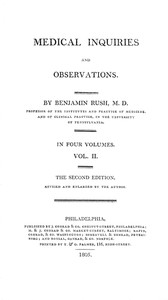
Medical Inquiries and Observations, Vol. 2 by Benjamin Rush
Let's be clear: this is not a novel. Medical Inquiries and Observations, Vol. 2 is a collection of Dr. Benjamin Rush's essays, case studies, and theories from the late 18th century. Think of it as his professional journal, published for the world to see. He writes about everything he encountered: the devastating yellow fever epidemics that swept Philadelphia, his thoughts on mental illness (which he called 'diseases of the mind'), and his plans for keeping cities healthy.
The Story
There's no single plot, but there is a powerful narrative thread. It's the story of a brilliant man trying to make sense of a terrifying and poorly understood world. Rush describes patients and outbreaks in vivid detail. You feel the panic of the fever seasons and his desperate rush to find causes and cures. He argues passionately for humane treatment of the mentally ill, which was radical for his time. But woven into this progressive thinking is his fierce advocacy for 'heroic' medicine—particularly draining large amounts of blood from sick patients to balance their bodies. The book shows his mind at work, connecting dots, making bold claims, and sometimes clinging to ideas even when his own observations might suggest otherwise.
Why You Should Read It
You read this to meet the man, not just memorize his methods. Rush's voice is astonishingly present. He's confident, compassionate, and frequently contradictory. Reading his words, you gain a raw, unfiltered look at how medicine worked (and often didn't work) at the dawn of the United States. It's fascinating to see which of his hunches were correct (like linking sanitation to disease) and which were disastrously wrong. This book doesn't ask you to agree with him; it invites you to understand the immense challenge of building medical knowledge from the ground up. It’s about the courage to observe and the peril of conviction.
Final Verdict
This is a niche read, but a profoundly rewarding one. It's perfect for history buffs who want to go beyond politics and see the founding era through the eyes of science. It's great for anyone in medicine or public health who wants a deep, personal perspective on their field's rocky origins. Most of all, it's for curious readers who enjoy complex, flawed characters—especially when that character is a real historical giant, wrestling with life and death on the page. Don't expect a smooth, modern narrative. Do expect to be fascinated, frustrated, and utterly transported.
This book is widely considered to be in the public domain. It is available for public use and education.
Andrew Walker
1 year agoAfter hearing about this author multiple times, the atmosphere created is totally immersive. I would gladly recommend this title.





Matthew Martin
2 years agoI took detailed notes while reading through the chapters and the emphasis on ethics and sustainability within the topic is commendable. Thanks for making such a high-quality version available.