eBooks
95 Books foundAbout the QUICKF Public Domain Literature Library
The QUICKF Public Domain Literature Library offers a carefully selected collection of 95 works, all freely available in the public domain. This catalogue is designed for readers interested in historical texts, philosophical ideas, and the development of thought across cultures and centuries. Each record provides bibliographic details, keywords, and a concise editorial note to help orient new readers.
Browsing the Catalogue
Readers may explore the collection through several approaches. The main archive page lists all works alphabetically by title. Each entry includes the author, translator where applicable, publisher, and a set of subject keywords. The editorial note offers a brief orientation, highlighting the work's structure, themes, or historical context without substituting for the text itself.
For thematic navigation, the catalogue groups works into The catalogue currently contains 4 active subject categories: Ethics, Logic, Metaphysics, and Political Philosophy. Categories are used as browsing aids and may overlap where a work reasonably fits more than one subject." This category gathers texts that examine ideas, events, and figures in their broader historical or philosophical settings. From Martin Luther's disputation on indulgences to Bertrand Russell's analysis of political systems, these works invite readers to consider how ideas emerge from and respond to their times.
Book Records and Source Attribution
Every book record in the catalogue includes the title, author, translator (if any), publisher, and a set of Library of Congress subject headings. The source for all texts is Project Gutenberg, a trusted repository of public-domain works. The catalogue does not host files but links to the full texts on the Project Gutenberg site. Links are provided for each work.
The editorial notes are original to this catalogue. They are prepared as supplementary catalogue material, Walt Swift, and are intended to provide a helpful entry point, not a comprehensive analysis. They reflect a single reader's perspective, not peer review or institutional endorsement.
Three Practical Reading Paths
The catalogue supports several reading journeys. One path follows the theme of religious and philosophical authority. Start with Martin Luther's Disputation of Doctor Martin Luther on the Power and Efficacy of Indulgences (213), then move to Robert Barclay's An Apology for the True Christian Divinity (287), and conclude with the anonymous Answer to Dr. Priestley's Letters to a Philosophical Unbeliever (237). This sequence traces debates about authority from Reformation through Quakerism to Enlightenment rationalism.
A second path explores ancient and medieval ethics. Begin with Cicero's De Officiis (278), continue with Xenophon's The Memorabilia (217), and finish with Dante's The Banquet (Il Convito) (231). These works show how ethical thought develops from Roman pragmatism to Socratic dialogue to medieval synthesis.
A third path investigates the intersection of science and belief. Start with Ernst Haeckel's The Riddle of the Universe (268) for a monistic manifesto, then read George Berkeley's Three Dialogues Between Hylas and Philonous (219) for an idealist counterpoint, and end with Thomas Woolston's Six Discourses on the Miracles of Our Saviour (269) to see historical criticism applied to scripture.
How the Catalogue Differs from Others
Unlike many public-domain archives that emphasize fiction or poetry, this Catalogue maintenance uses source records and bibliographic context. It is not comprehensive; it is a curated selection meant to illuminate conversations between texts. The catalogue currently uses four active subject categories: Ethics, Logic, Metaphysics, and Political Philosophy. Readers will find no novels or plays here, but rather treatises, dialogues, sermons, and essays that shaped world events.
The catalogue also differs in its editorial approach. Notes are written as companions, not as academic introductions. They point to structure, recurring imagery, and points of entry, rather than summarizing arguments or adjudicating disputes.
Bibliographic dates and catalogue measurements
The catalogue distinguishes the Project Gutenberg digital release from a work’s original or first publication. Project Gutenberg is identified as the digital source for the edition available here; its release year is therefore shown as Gutenberg Release Year, not as the work’s original publication year.
When an explicit first-publication or issue date can be supported directly by the title or issue information, it may be shown separately as First Publication Year. When that date cannot be confirmed, the catalogue displays Not confirmed rather than guessing a year.
Where the source text can be measured reliably, the catalogue may provide word count and estimated reading time. These measurements describe reading scope and are not quality rankings.
The current catalogue contains 4 active subject categories: Ethics, Logic, Metaphysics, and Political Philosophy. Categories are browsing aids and may overlap where a work reasonably fits more than one subject.
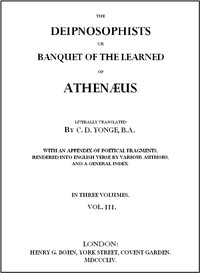
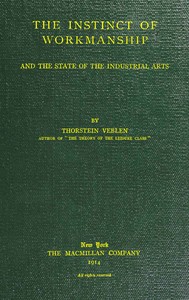
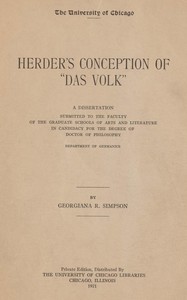
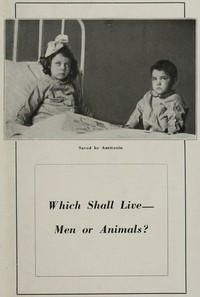
- Featured