
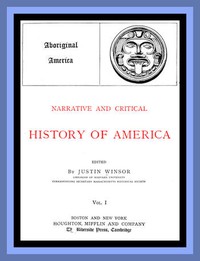
Narrative and Critical History of America, Vol. 1 (of 8) by Justin Winsor
Okay, let's set the scene. It's the 1880s. The United States is just over a century old, feeling its power, and starting to ask big questions about where it all began. Enter Justin Winsor, a librarian and historian, who gathers a dream team of the smartest academics he can find. Their mission? To create the definitive, multi-volume history of the entire American continent, from its literal rock-bottom beginnings.
The Story
This first volume is like the prequel to all prequels. It doesn't start with Columbus or the Pilgrims. It starts with the land itself. The opening chapters wrestle with wild 19th-century science—theories about ice ages, sunken continents, and how the first humans might have crossed from Asia. Then, it moves into the age of exploration, but not as a simple hero's tale. You get chapters on the Norse sagas and Vinland, the complex world of pre-Columbian civilizations, and then the slow, often brutal, encroachment of Spanish, Portuguese, French, and English explorers. The 'plot' is the collision of worlds and the desperate attempt by these scholars to make sense of it all from their 1880s viewpoint. The book ends as European footholds are being established, setting the stage for the colonial dramas to come in later volumes.
Why You Should Read It
Here’s the cool part: you're not just reading history; you're reading historiography—the history of history. You see what facts these late-1800s experts had, what myths they believed, and what biases shaped their conclusions. When they discuss Native American cultures, you feel the weight of their era's perspectives. When they analyze a map from the 1500s, you share in their detective work. It’s a time capsule of intellectual thought. The writing is dense, I won't lie, but in that density is a kind of magic. You witness the building of the national story, brick by scholarly brick, complete with all the arguments about where each brick should go.
Final Verdict
This is not a beach read. It's for a specific kind of reader: the history nerd who loves primary sources, the book lover fascinated by ambitious publishing projects of the past, or anyone who enjoys seeing how ideas are made. If you’ve read a lot of modern popular history and want to understand the foundation it was built on, this is a fascinating deep dive. Think of it as the director's commentary for the story of America, recorded in 1884. Perfect for patient readers who like their stories with a side of meta-analysis and a thick layer of Victorian scholarship.
Legal analysis indicates this work is in the public domain. Enjoy reading and sharing without restrictions.
Donald Robinson
1 year agoComprehensive and well-researched.
Matthew Wright
1 year agoSolid story.



Joseph Hernandez
8 months agoEnjoyed every page.