About 176 minutes
A Treatise Concerning the Principles of Human Knowledge — A Closer Reading
Political Philosophy
40,315 recorded words. 3 minutes difference from this book's estimate.
View Gutenberg source #4723

Three Dialogues Between Hylas and Philonous in Opposition to Sceptics and Atheists — Reading Notes can be approached with a clearer sense of reading commitment from its source measurements: 39,709 words, 2 hr 53 min estimated reading time, and 4 detected text sections.
The text analysis averages about 22.1 words per sentence, while the detected sections provide another way to judge how the source is divided.
Project Gutenberg metadata also associates the work with “Soul,” connecting these edition facts with the source record’s subject description.
Explore this collection
These alternatives are selected using recorded categories and estimated reading time.
About 176 minutes
Political Philosophy
40,315 recorded words. 3 minutes difference from this book's estimate.
View Gutenberg source #4723About 164 minutes
Political Philosophy
37,621 recorded words. 9 minutes difference from this book's estimate.
View Gutenberg source #42865About 144 minutes
Political Philosophy
33,106 recorded words. 29 minutes difference from this book's estimate.
View Gutenberg source #4094Search stored excerpts and compare books → Choose by your preferences →
Choices use stored catalog measurements. Estimates vary with reading speed. A shared category is a catalog label, not a claim that two books have the same argument or literary quality.
Search reads excerpt text stored with this catalog and links to its associated Gutenberg record. The connection is stored in the site database; this tool does not recheck that every excerpt is word-for-word identical to that external record. Excerpt search does not cover every chapter and does not verify historical publication dates.
Catalog snapshot checked: 2026-09-26. Coverage: 95 public books, 95 available source excerpts.
Calculated from edition completeness, EPUB availability, text structure and catalogue metadata. Not a user rating.
Total of 100 points, scaled to a 2.5-5.0 range. Editions with an empty description or a missing EPUB file are not scored.
Public-domain source text
The source text is kept in the dedicated reader, separate from this catalogue record and its commentary.
The first dialogue opens in a garden at dawn, with Philonous praising the "purple sky" and "fragrant bloom" as pleasures lost to those absorbed in abstract thought. This sensory scene immediately frames the central tension: whether the qualities we perceive—color, sound, warmth—belong to objects outside the mind or are entirely mind-dependent. Hylas enters troubled by the "odd fate" of sceptics who undermine common beliefs, yet Philonous soon turns the tables, claiming he has "quitted several of the sublime notions" of the schools for "the plain dictates of nature and common sense." The dialogue thus inverts expectations: the defender of ordinary experience is the idealist, while the materialist struggles to articulate a coherent notion of matter.
The setting is not decorative. Berkeley places the entire first dialogue in a garden at sunrise, a locus of immediate sensory delight. Philonous draws Hylas's attention to "those wild but sweet notes of birds" and "the gentle influence of the rising sun," using these particulars to challenge the distinction between appearance and reality. The garden functions as a controlled environment where abstract arguments are tested against concrete perception. Hylas's discomfort with scepticism is mirrored in his physical restlessness—he "could not sleep" and takes a turn outdoors—while Philonous's calm enjoyment suggests a mind at ease with its own principles. This spatial contrast reinforces the epistemological stakes: who truly inhabits the world of common sense?
Philonous systematically dismantles Hylas's notion of material substance by forcing him to define it. Hylas begins by asserting that matter exists outside the mind as an immediate object, then retreats to calling it an archetype, then a cause, then an instrument, then an occasion. Finally, he admits he has "no positive notion or meaning at all" and can only give "negative answers." Philonous summarizes this trajectory: "At first, from a belief of material substance, you would have it that the immediate objects existed without the mind; then that they are archetypes; then causes; next instruments; then occasions: lastly SOMETHING IN GENERAL, which being interpreted proves NOTHING." The dialogue thus performs the very reduction it argues for, leaving Hylas with only an "obscure surmise of I know not what, MATTER."
Berkeley structures the argument as a series of reversals. Hylas opens by attacking sceptics, but Philonous adopts the language of common sense and accuses Hylas of holding a "repugnant" and "extravagant" position. When Hylas insists that inconceivability is no argument against existence, Philonous counters that without any relative notion, cause, or revelation, the word "matter" becomes "mere jargon." The burden shifts entirely: Hylas must produce a positive account, not merely deny Philonous's. This rhetorical strategy mirrors the philosophical claim that the materialist's position is empty. The dialogue ends not with a knock-down proof but with Hylas's reluctant admission that the arguments are "unanswerable" yet fail to produce "hearty acquiescence," leaving a gap between rational conviction and psychological assent.
Readers should attend to the dramatic structure: the dialogues are not treatises but conversations in which character and setting reinforce argument. Hylas's persistent resistance, even after logical defeat, illustrates the gap between intellectual persuasion and lived belief. The text rewards close attention to how Berkeley uses everyday examples—a fire's warmth, a stone's hardness—to challenge abstract metaphysics. The garden opening is not incidental; it grounds the idealist thesis in the very sensory experience it seeks to explain.
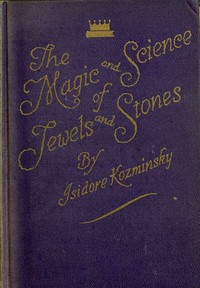
Reading Berkeley’s dialogues, I kept returning to the garden where Hylas finally lets go of substance—how the stone in his hand becomes a fleeting bundle of sensations. It reminded me of The Magic and Science of Jewels and Stones — Inside the Classic, where gems shimmer between physics and folklore, never quite settling into one truth. Strange, how both leave you holding something that isn’t quite there.
Build a private reading journal entry for this title.